
Walk into a modern home and you’re often invited into the kitchen before the living room. Here people cook, talk, work, and gather. Time‑use studies show that many adults spend close to an hour a day on cooking and food preparation alone, not counting the time spent eating there.
From Hidden Hearth to Home Stage: A Brief History of the Kitchen
For most of history, the kitchen was a working engine kept out of sight. In many European homes, cooking took place in dark back rooms or shared courtyards, filled with smoke, heat, and heavy labor rather than design. Guests were welcomed into parlors and dining rooms; the kitchen was where servants or family members worked, not where people lingered.
That changed as technology, housing, and social life evolved. Gas and electric stoves, running water, and better ventilation gradually made kitchens cleaner, brighter, and safer. In the 20th century, the “fitted kitchen” brought cabinets, counters, and appliances into a single, planned space, turning the room into a symbol of modern life rather than a hidden workshop. Today, the kitchen is often the social heart of many homes.
Cooking, Still Lifes, and Everyday Magic: Kitchen Art in Art History
Long before people framed prints for their kitchens, painters were already fascinated by what happens around food. Still lifes with fruit, bread, copper pots, and wine bottles turned ordinary ingredients into symbols of abundance, gratitude, or the passing of time. Scenes of people cooking, serving, or eating together captured social class, gender roles, and family life in a single glance.
Kitchen and food imagery gave artists a way to talk about what truly sustains us. A bowl of fruit could hint at seasonal cycles, a loaf of bread at work and care, a cluttered table at celebration and intimacy. These images turned the most practical room in the house into something almost sacred: a place where survival and pleasure meet.
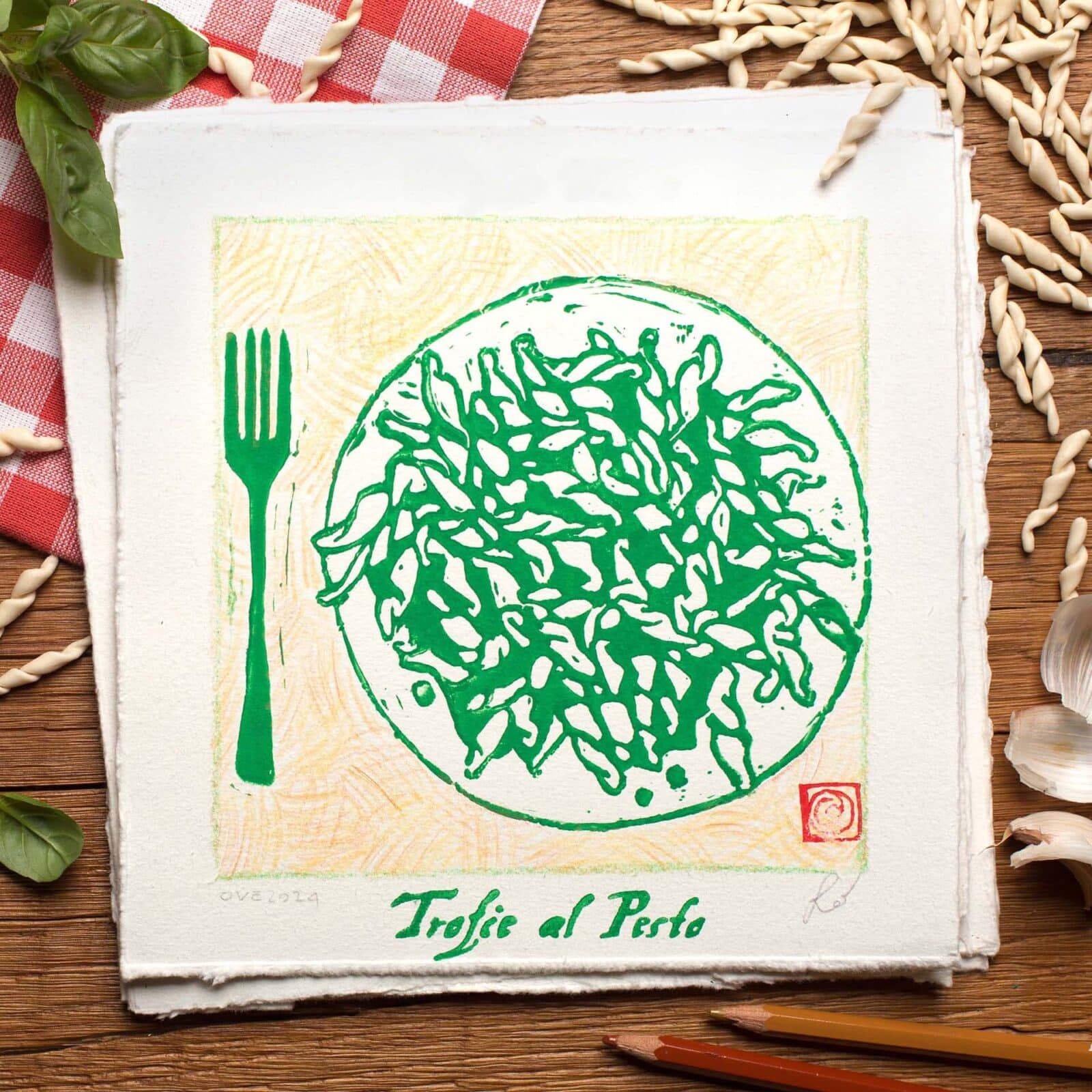
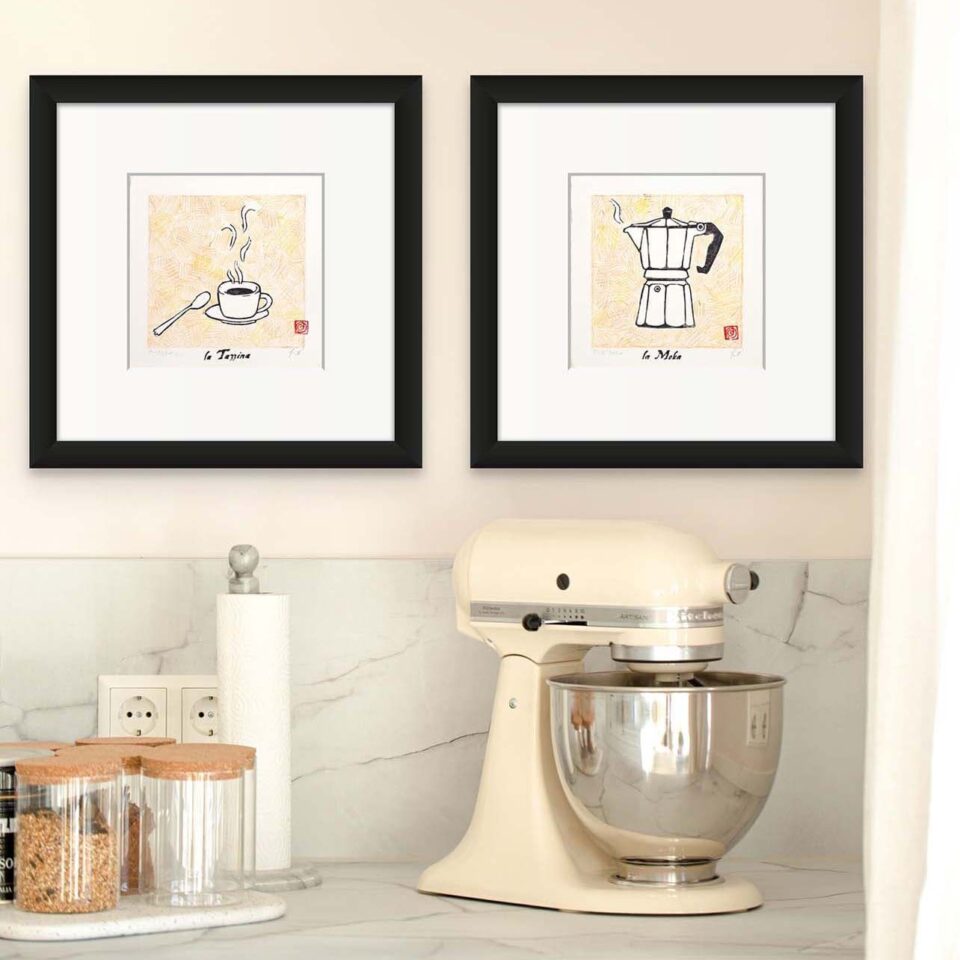
When someone hangs a small print of a moka pot, a pasta dish, or a jar of pesto in their kitchen today, they are unconsciously continuing this tradition. They are saying: “This is where my rituals live. This is where my culture, memories, and relationships come together.”
What Art Does to Our Nervous System (And Why That Matters in the Kitchen)
When people say “art makes me feel better,” it is not just a poetic idea. Brain‑imaging and art‑therapy research show that looking at or creating art can activate the brain’s reward system, increasing dopamine in areas linked to pleasure, curiosity, and motivation. This is one reason a single image can feel like a tiny spark of joy every time you walk past it.
Art also helps the body shift from “fight or flight” towards “rest and digest.” When we feel engaged by something beautiful or meaningful, the parasympathetic nervous system comes online: heart rate slows, breathing deepens, and stress hormones such as cortisol can decrease. Over time, regular moments of this quieter state support recovery from everyday stress and decision fatigue.
On an emotional level, art gives the brain a safe way to process and organize feelings. It offers gentle distraction, but also reflection: a color, a symbol, or a familiar object can help people name what they are experiencing, which is a key part of emotional regulation. In clinical settings, art‑based therapies even support neuroplasticity—the brain’s capacity to form new connections—by combining sensory, motor, and emotional engagement in one activity. In other words, art – just like cooking – can be a transformative experience.
Why Kitchen Art Isn’t Like Living‑Room Art
The kitchen looks like any other room on a floor plan, but it behaves very differently. Heat, steam, splashes, and smells all shape what can hang comfortably on the walls. An oil‑heavy canvas above a stove or a delicate, unprotected print next to a sink will age much faster than in a calm living room.
Distance also changes everything. In the living room, art is often viewed from the sofa several meters away, so large pieces and broad compositions make sense. In the kitchen, people stand close to the wall while cooking, making coffee, or opening a cupboard. Smaller works with clear shapes, strong silhouettes, or simple compositions are easier to enjoy at a glance in the middle of activity.
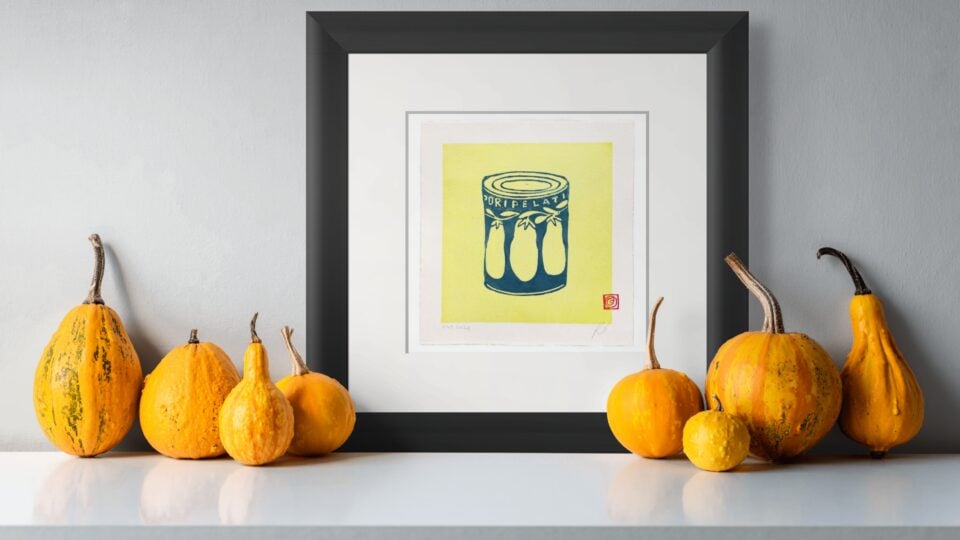
The timing is different too. Kitchen art is seen during transitions: early mornings, rushed lunches, evening cooking, late‑night snacks. This favors images that are immediately legible and emotionally direct—joyful ingredients, favorite rituals, a bit of humor, or a quiet landscape—rather than very complex, demanding works. A hand made print of a tin of Pomodori Pelati, for instance, can make your heart smile.
Kitchen art for interior design professionals
For both retailers who sell kitchen art and home decorators, the key is to think of kitchen art not as one big decision, but as a series of small, joyful moments: coffee, breakfast, cooking, washing up. Small, well‑placed artworks turn each of these touchpoints into a tiny pause of pleasure.
For both retailers and home decorators, the key is to think of kitchen art not as one big decision, but as a series of small, joyful moments: coffee, breakfast, cooking, washing up. Small, well‑placed artworks turn each of these touchpoints into a tiny pause of pleasure.
Small handmade prints are also practical. They are easy to stock, easy to ship, and easy for customers to place even in compact European kitchens. They work alone, in pairs, or in clusters, and they can be moved as life changes: from rental to first home, from one coffee corner to another. In this way, kitchen art becomes not just decor, but a portable archive of someone’s daily joys.